
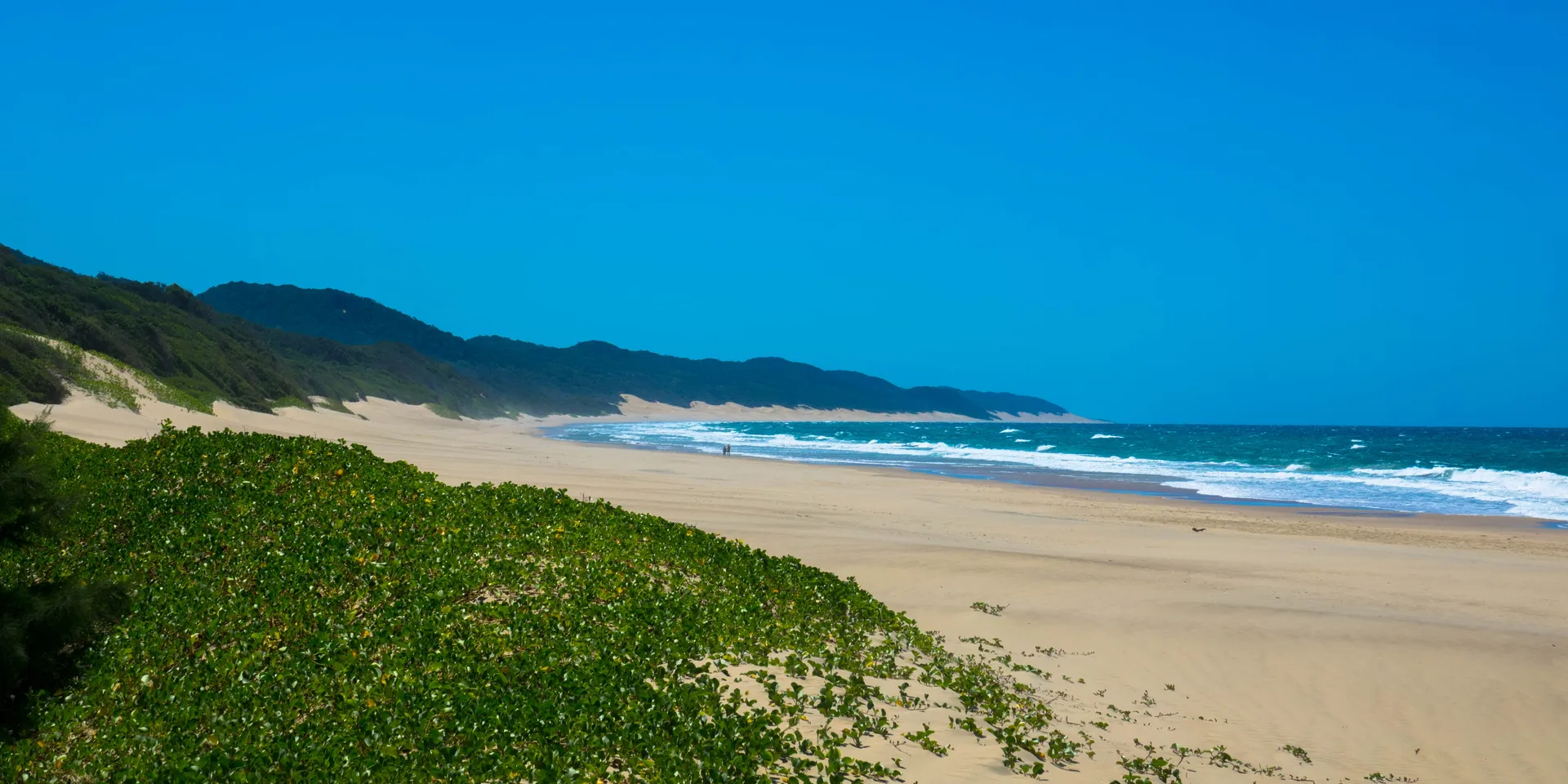
Cape Vidal and the Eastern Shores
In the sea before breakfast, watching zebra by mid-morning.”
Lying on the Eastern Shores of Lake St Lucia, in iSimangaliso Wetland Park in northern KwaZulu-Natal, Cape Vidal is a rare place: it is where the warm Indian Ocean and a wildlife-rich protected landscape sit side by side, separated only by a ridge of forested dunes. People drive a long way to pitch their tents here, for good reason.
On one side there is a reef-sheltered bay, visited seasonally by humpback whales and, on summer nights, by nesting turtles. On the other you’ll find the grasslands and coastal forest of a protected reserve, home to buffalo, kudu, reedbuck and hippo. You can be in the sea before breakfast and watching zebra on a loop road by mid-morning; few South African destinations combine both so easily.
Where is Cape Vidal?
Cape Vidal sits inside iSimangaliso Wetland Park in northern KwaZulu-Natal, on the Eastern Shores of Lake St Lucia, about 33km north of the Bhangazi Gate near the town of St Lucia. It is a straightforward drive from Durban and King Shaka International Airport.
Driving from St Lucia
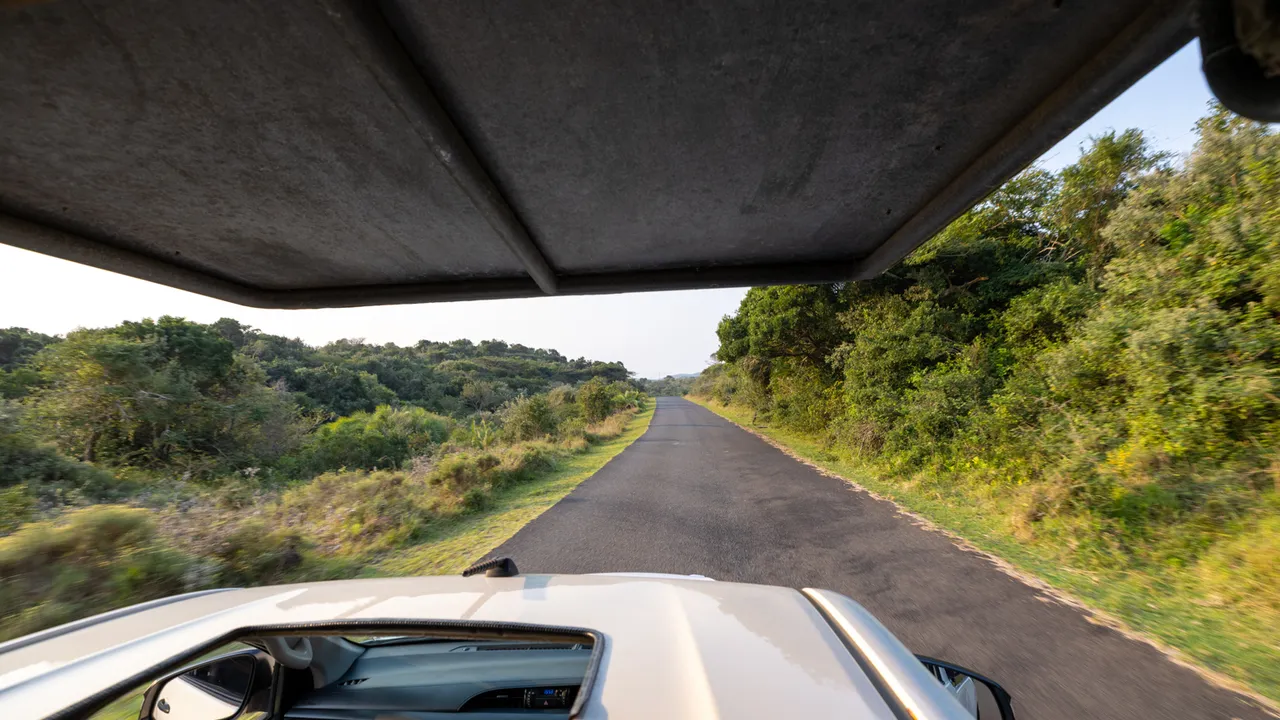
The drive is part of the pleasure, and you do not need a 4x4 vehicle to reach camp. From the N2, turn off at Mtubatuba and follow the R618 towards the town of St Lucia. As you reach the town, cross the bridge over the estuary and turn left at the T-junction, then carry on for a few kilometres to the Bhangazi Gate. From the gate it is roughly 33km of paved road north to Cape Vidal, through dune forest and open grassland, with game to be seen along the way.
Inside the park you are in a conservation area, so take it slowly. Speed limits are low, the animals have right of way, and half the fun is the drive in. Several loop roads branch off the main road between St Lucia and Cape Vidal, so you can turn a simple transfer into a self-drive safari if you leave a little time for it.
Before you set off
- Vehicle: a standard car is fine to reach camp. Most loop roads are gravel but are well maintained; there are some loop roads where a 4x4 vehicle is needed, especially during the rainy months
- Drive slowly: inside the park, the animals have right of way and speed limits are low
- Gate times and fees change with the seasons, so check the current details with iSimangaliso before you travel
The bush half
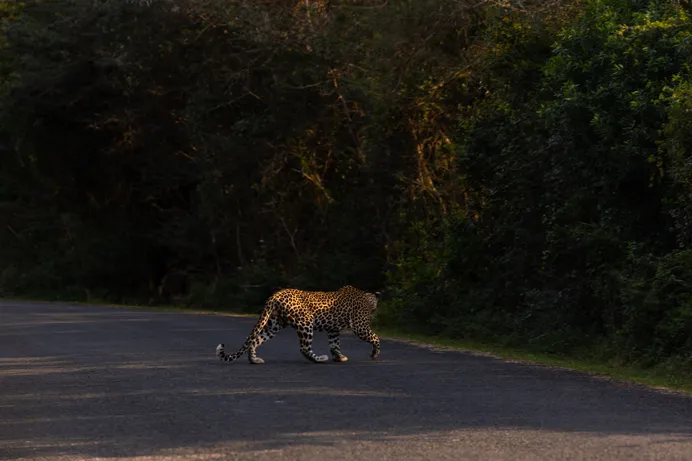
The land side of Cape Vidal is a mosaic of dune forest, open grassland and freshwater pans, and it rewards a patient eye. The grassland loops are the classic safari outing: look out for zebra, kudu, buffalo and warthog, with the chance of larger game – elephant, rhino and leopard – moving through. Around camp you may see bushbuck and red duiker slipping between the trees, and vervet and samango monkeys keeping a close eye on your lunch.
For birders it is a treasure trove. The swamp forest and pans hold sought-after species, from Livingstone’s turaco and the pink-throated twinspot to the southern banded snake eagle, and the dawn chorus alone is worth setting an alarm for.
The beach half
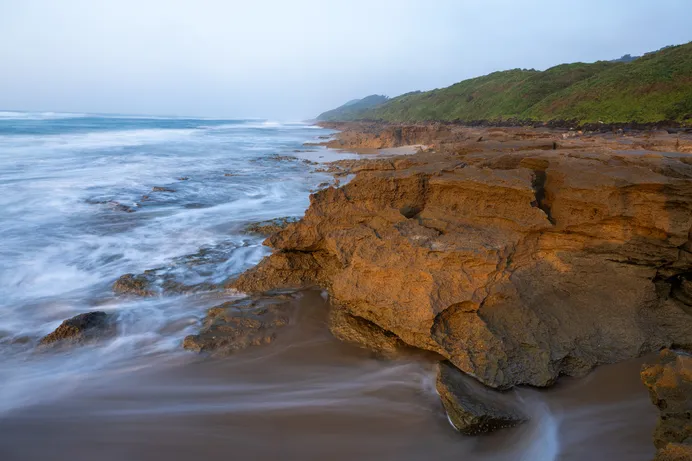
The bay at Cape Vidal is sheltered by a rock reef that is exposed at low spring tides, creating pools and accessible snorkelling when conditions are suitable. The water is warm, carried south by the Agulhas Current, which helps sustain the southernmost coral reefs in Africa. Snorkel gently in the hour either side of low tide; step back onto kilometres of clean, quiet beach, where you can walk for a long way and meet almost no one.
The ocean also keeps a calendar. From June to November, humpback whales pass close inshore on their migration north, easily watched from the high dunes. From November to March, loggerhead and leatherback turtles haul up the beach at night to lay their eggs, one of the great wildlife spectacles anywhere, and best seen with a licensed guide.
Worth the short drive
Cape Vidal is a fine base for the rest of the Eastern Shores. Three places in particular are worth the short drive, and each of them fills a morning comfortably.
Mission Rocks
About 16km south of Cape Vidal, Mission Rocks is a dramatic run of rocky shoreline famous for its tidal pools, alive with small marine creatures at low tide. The seas here are too strong for swimming, but it is a fine spot for a picnic, for fishing, and for whale watching from the cliffs, with a history of shipwreck and old mission stations layered underneath.
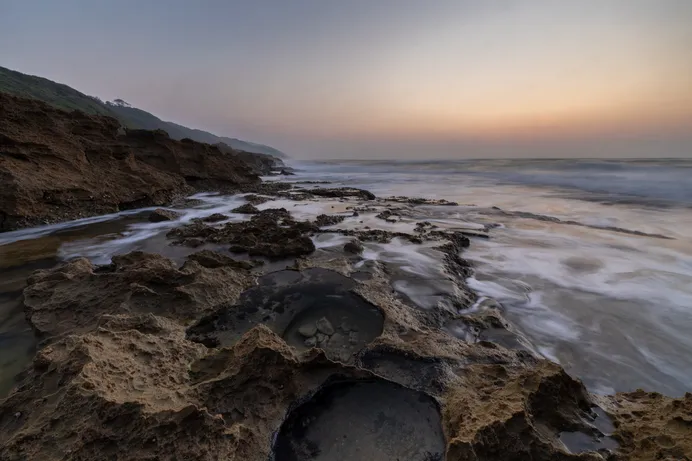
The Bats Cave
Just south of Mission Rocks, a short beach walk of about two kilometres brings you, at low tide only, to a sea cave home to a colony of Egyptian fruit bats. Check the tide tables before you set out, take water, and enjoy the birding and whale spotting along the way.
St Lucia town
On your way in or out, the little town of St Lucia is worth an hour or a night: estuary boat cruises among hippos and crocodiles, a handful of good restaurants, and the odd hippo wandering the streets after dark, which is exactly as surprising as it sounds.
A place with a long memory
All of this sits inside iSimangaliso, listed in 1999 as South Africa’s first UNESCO World Heritage Site. Its name means miracle and wonder, and across its lakes, forests, dunes and reefs it protects an extraordinary sweep of life. Staying at Cape Vidal makes you a guest in that story, which is a privilege worth travelling for, and worth looking after while you are here.
In short
A World Heritage landscape where bush meets beach, a straightforward paved drive from St Lucia, no 4x4 vehicle needed, and enough to fill a long weekend or a fortnight. Come for the snorkelling, stay for the whole place.
Refresh, restore & reconnect at Cape Vidal
Sites are limited and busy in summer and school holidays, so plan ahead. Send us your dates and our reservations team will confirm what is available.